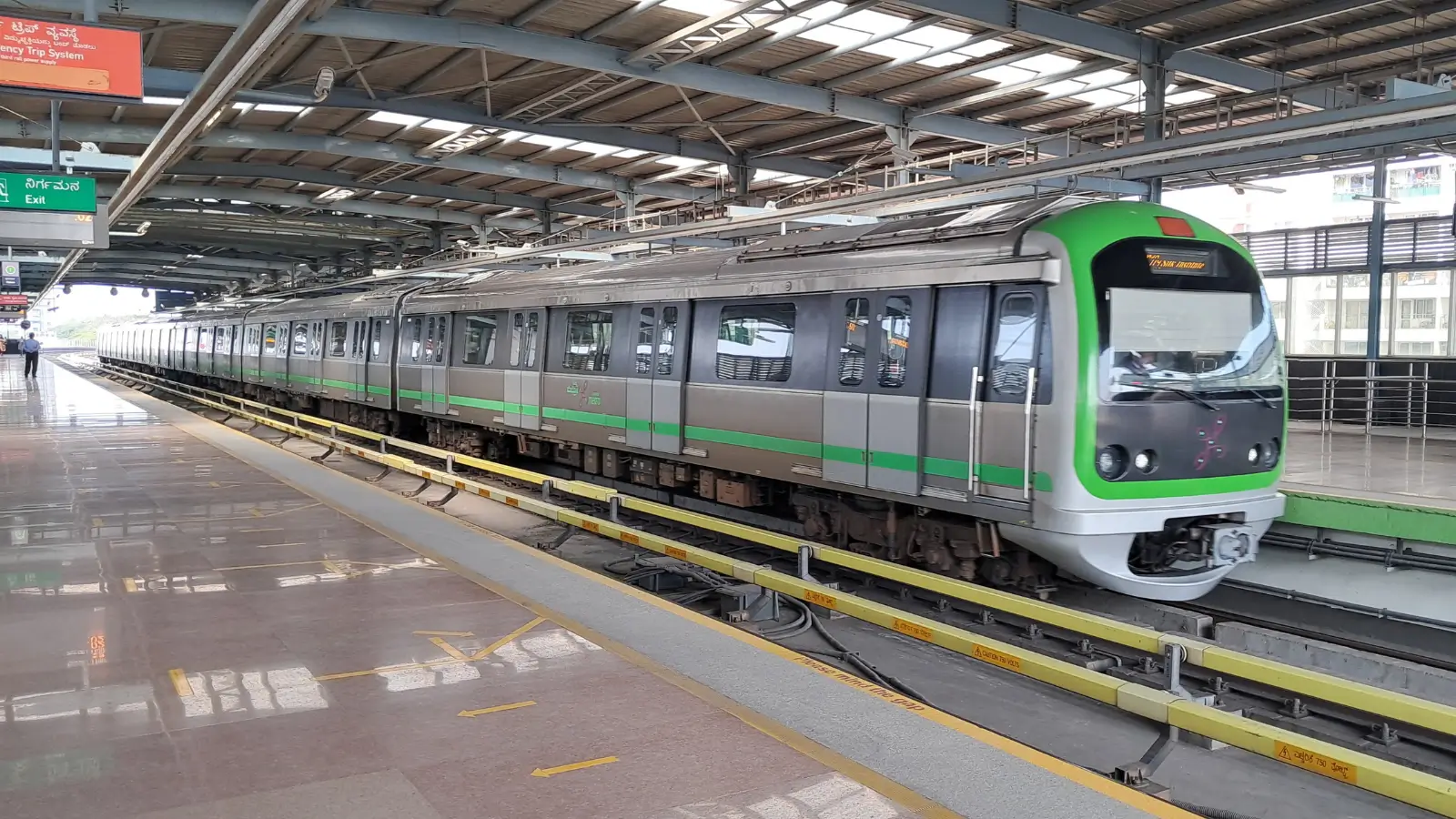
Metro stations change neighbourhoods, though rarely on the schedule buyers expect. Along the airport corridor, Doddajala Metro Station sits on the...
Metro stations change neighbourhoods, though rarely on the schedule buyers expect. Along the airport corridor, Doddajala Metro Station sits on the Phase 2B Blue Line alignment and remains under execution rather than in service. Weighing the Doddajala metro station impact on property therefore means separating what exists from what is planned, and pricing each accordingly. This guide covers where the station sits, what rail access typically does to a micro-market, and how a careful buyer should treat a benefit that has not yet arrived.
Where the station sits
Doddajala lies roughly 7 km from the Tharahunise and Bettahalsur belt, a drive of about 12 to 15 minutes. That places it within easy reach of homes along this stretch without putting it on the doorstep.
Position on the Phase 2B Blue Line matters as much as distance. An alignment serving the airport corridor connects residents to a different set of destinations from the radial lines that serve the city's older suburbs.
Seven kilometres suits a drive or a feeder service rather than a walk. Buyers should picture a park-and-ride pattern instead of stepping out of the lobby onto a platform.
Distance from a station changes how people use it. At seven kilometres, the Doddajala metro station impact on property here would work through convenience rather than through walkability.
Feeder buses, autos and app-based transport usually fill the gap between a station and the homes around it. How well they do so shapes whether residents actually use the line.
What rail access usually does
Evidence from other corridors is consistent in direction if not in magnitude. Reliable rail widens the pool of people willing to live somewhere, because it removes the dependence on road conditions that deters many buyers.
Metro proximity and rental demand are linked for the same reason. Tenants without cars, or households running one car instead of two, will generally pay a premium for a rail option within a short drive.
Effects also vary by segment. Rental demand usually responds first, resale follows, and the strength of both depends on how many people the line genuinely serves.
Frequency will matter as much as proximity. A station served often is worth considerably more than one served occasionally, whatever the distance from home.
The corridor context
Rail is arriving into a belt that already carries substantial employment. Aerospace and defence sit at the KIADB Aerospace SEZ, financial services at IFCI Financial City, and IT and manufacturing at Devanahalli Business Park and the industrial zone.
Transport-led appreciation works best where jobs already exist, since a line connecting homes to nothing changes little. Here the sequence runs the other way, with employment established and transport catching up.
The airport itself is the other anchor, about 14 km away. A metro serving both a terminal and an employment belt has a broader base of users than one serving either alone.
Airport-corridor lines carry an unusual mix of users. Commuters, travellers and airport staff all use them, which tends to support frequency and therefore usefulness.
Employment and transport reinforce one another over time. Jobs justify the line, and the line then attracts further employers, which is how corridors mature.
Element | Position |
|---|---|
Doddajala Metro Station | ~7 km, 12–15 minutes by road |
Line | Namma Metro Phase 2B Blue Line |
Status | Under execution |
Airport | ~14 km, 20–25 minutes |
Satellite Town Ring Road | ~8 km, under phased commissioning |
Peripheral Ring Road | ~14 km, under development |
How to price something unbuilt
Infrastructure under execution deserves a discount rather than full credit. Projects of this scale routinely shift by quarters or years, and a purchase made today should stand up even if the line opens later than hoped.
A useful test is to ask whether the address works without the metro. Where the answer is yes, rail becomes genuine upside; where the answer is no, the purchase depends on a variable outside anyone's control.
Timelines are the weak point in any such calculation. Buyers should assume slippage rather than precision, since large transit projects rarely open exactly when first indicated.
Discounting an unbuilt benefit is simply prudent. Where a purchase depends on it entirely, the risk has been transferred to a schedule outside your control.
What it could mean here
For the belt around Tharahunise and Bettahalsur, a functioning station 7 km away would add an option rather than replace the car. Most residents would still drive to work, with rail covering airport runs and trips towards the city.
Rental demand is where the effect might show first. Corporate tenants weigh connectivity heavily, and a rail link tends to appear in leasing decisions before it appears in resale prices.
Owners of homes handing over towards the end of this decade sit in an interesting position. Their occupation date and the line's commissioning window could fall reasonably close together.
Occupation dates matter here as well. Homes handing over towards the end of the decade may see their owners move in around the same window the line becomes useful.
Nearby employment is what gives a station its ridership. Without it, a line moves people past a place rather than to it.
What to check before you buy
Confirm current status with the transport authority rather than relying on a sales conversation. Published alignments and stated progress are matters of public record, and they change.
Then weigh the address on its existing merits: employment within a short radius, the airport at 14 km, established schools and hospitals at Yelahanka, and the road network already in place. Our team can talk through both sides.
Road access is what the address offers today. Airport at 14 km, employment within 13 km and schools from 2 km all exist now, whatever happens to the alignment.
Our team can set out what is confirmed and what is not, so you can weigh the address on facts rather than forecasts.
Karnataka RERA Registration No. PRM/KA/RERA/1251/309/PR/090926/008925. To check availability, current pricing or to arrange a site visit, get in touch with our team.
FAQs
How far is Doddajala Metro Station?
About 7 km from the Tharahunise and Bettahalsur belt, or 12 to 15 minutes by road.Which line serves it?
The Namma Metro Phase 2B Blue Line, which serves the airport corridor.Is the station operational?
No. The alignment is under execution rather than in service.Will it raise property prices?
Rail access typically widens the buyer and tenant pool. Treat it as upside rather than something already reflected in value.Can I walk to the station?
At 7 km, no. Plan for a drive or a feeder service rather than a walk.Does it help renting out a home?
Corporate tenants weigh connectivity heavily, so rail tends to influence leasing decisions early.What else is under construction nearby?
The Satellite Town Ring Road, about 8 km north, and the Peripheral Ring Road corridor to the south-west.How should I price the metro in?
Cautiously. Buy an address that works without it, and treat the line as an improvement rather than a requirement.
Related Articles

Embassy South Reserve Review: An Honest Assessment
Nobody lives here yet, and possession is set for 2032, so any Embassy South Reserve review has to work from documents rather than experience. That...

The Embassy South Reserve Booking Process, Step by Step
Buying a home is a sequence of decisions rather than a single one, and knowing the order keeps control where it belongs. Expression-of-interest holders...

Embassy South Reserve Cost Sheet: Every Line Explained
Rs 1.92 Cr buys a 2 BHK here, or so the headline says. What leaves your account is another figure entirely, and the gap between the two runs to lakhs...

Checking the Embassy South Reserve RERA Registration
A registration number on a brochure proves very little by itself. Behind it sits a filing on a public portal, and that filing is what actually protects...