
A registration number on a brochure proves very little by itself. Behind it sits a filing on a public portal, and that filing is what actually protects...
A registration number on a brochure proves very little by itself. Behind it sits a filing on a public portal, and that filing is what actually protects a buyer. Reading it takes a few minutes and changes what you know about a project, which is why the exercise belongs before any payment rather than after. This guide covers the Embassy South Reserve RERA number, what the record contains, how to search for it, and which details to compare against the papers a sales team hands you.
The registration itself
Karnataka's Real Estate Regulatory Authority has registered the project under number PRM/KA/RERA/1251/309/PR/090926/008925. Anyone may search it, and no account is needed to view the record.
Two checks matter at the outset. Confirm that the registration is live, and confirm that it covers the tower or phase being offered to you, because large developments are sometimes registered in parts.
Registration status also indicates where a project stands. A live filing means sanctioned plans have been approved and milestone commitments accepted, which is a different proposition entirely from an offer made before approval.
Phased registration is common on large sites, and it catches buyers out. Confirming that the filing covers your tower takes a minute and saves a great deal of difficulty later.
Running the search
Open the K-RERA portal, choose the project search option, enter the number in full and open the record that returns. From there the filing divides into sections covering approvals, plans, timelines, financials and inventory.
One habit catches people out during a K-RERA portal search. Searching by project name often returns nothing useful, since projects are frequently registered under a legal entity name that differs from the marketing name.
Save or print the record once you find it. Filings update over time, so a dated copy of what you relied on proves useful should anything be questioned in the years before handover.
Entity names cause most of the confusion during a search. Projects are frequently registered under a legal name that differs from the marketing one, which is why searching by number returns a result while searching by name often does not.
What to check | Why it matters |
|---|---|
Registration validity and coverage | Confirms the filing applies to your tower or phase |
Sanctioned plans | Shows what was approved against what is marketed |
Milestone timelines | Records the committed possession date of 2032 |
Quarterly progress filings | Tracks construction without relying on assurances |
Unit inventory | Shows what is genuinely available for sale |
What registration protects
Karnataka applies its rules firmly. Seventy percent of buyer funds must sit in a dedicated account, progress is reported quarterly, prices are quoted on carpet area, and disputes follow time-bound resolution.
Among the escrow and buyer protections, fund segregation deserves particular attention. Restricting the diversion of money to other projects addresses the single mechanism by which developments have most often stalled.
Quarterly reporting deserves equal attention. Because progress must be filed against the same record throughout construction, the Embassy South Reserve RERA page remains useful long after booking rather than serving only as a one-off check.
Escrow rules also shape how a developer funds construction. Money collected here cannot be moved to another project, which removes the mechanism behind many historical stalls.
Comparing filings with your paperwork
Proper sanctioned plan comparison means putting documents side by side. Set the sanctioned drawing against the marketed floor plan, the filed possession date against the date in your agreement to sell, and the carpet area in the filing against the area on your cost sheet.
Differences are usually innocent, often a matter of an older document still circulating. Raise them in writing regardless, so the explanation joins your record rather than disappearing into a conversation.
Carpet-area pricing is the comparison most buyers skip. Stating usable space inside your walls rather than a saleable figure, it makes two projects genuinely comparable for the first time and often reorders a shortlist.
Differences between documents are usually innocent, often an older file still in circulation. Raising them in writing remains the right response, so the explanation joins your record rather than evaporating into a phone call.
After handover
Protection continues past possession. A defect liability period of five years covers structural and material faults, placing responsibility for early problems with the developer rather than the owner.
Sanctioned plans also cannot change after launch without meeting consent thresholds, so the design you commit to is the design you should receive when keys change hands in 2032.
Consent thresholds matter more than they sound. Without them, a buyer committing in 2026 would have little protection against a layout altered in 2029, and the provision closes exactly that gap.
Structural cover after handover is easy to overlook at the point of booking. Five years is a meaningful window, and it shifts responsibility for early faults away from the owner.
What the portal does not cover
Registration is no substitute for legal diligence. Title, encumbrance and conversion status still warrant an independent opinion, and tier-specific features such as Signature plunge pools need written confirmation for your particular apartment.
Buyers abroad can complete most portal checks before travelling, which makes a remote purchase considerably less uncertain. Bookmark the project page too, since quarterly filings keep appearing on the same record throughout construction.
Schedule your check before a site visit where possible. Walking in already familiar with the filing changes the conversation, because questions then come from the record rather than from a brochure.
Verification is not a single event either. Because filings continue through construction, the same record stays useful in 2029 and 2031 as much as in the week you book.
Legal opinion and portal check serve different purposes. One examines title and encumbrance, the other examines approvals and progress, and a careful buyer wants both.
Ask questions in writing wherever possible. Answers that exist on paper are worth considerably more in three years than answers that existed only in a conversation.
Karnataka RERA Registration No. PRM/KA/RERA/1251/309/PR/090926/008925. To check availability, current pricing or to arrange a site visit, get in touch with our team.
FAQs
What is the registration number?
It is PRM/KA/RERA/1251/309/PR/090926/008925, issued by the Karnataka Real Estate Regulatory Authority.Does viewing the filing cost anything?
No. Project records on the K-RERA portal are public and free to search.What should I check first?
That the registration covers the specific tower you are being offered, then the sanctioned plans and the filed possession date.Does registration guarantee delivery on time?
No, though it records a committed date and provides penalty clauses and legal recourse if handover slips without justification.How much of my money is protected?
Seventy percent of buyer funds must be held in a dedicated account, restricting diversion to other projects.What happens if specifications change?
Any deviation from the sanctioned specification triggers fresh disclosure rather than a quiet substitution.How long is the defect liability period?
Five years from handover, covering structural and material issues.Can NRIs verify from overseas?
Yes. The portal is online, so most checks can be completed before any travel.
Related Articles

Embassy South Reserve Review: An Honest Assessment
Nobody lives here yet, and possession is set for 2032, so any Embassy South Reserve review has to work from documents rather than experience. That...

How the Embassy South Reserve Payment Plan Works
Paying for a home that does not yet exist works nothing like paying for one that does. Money leaves in stages tied to building progress, which eases...
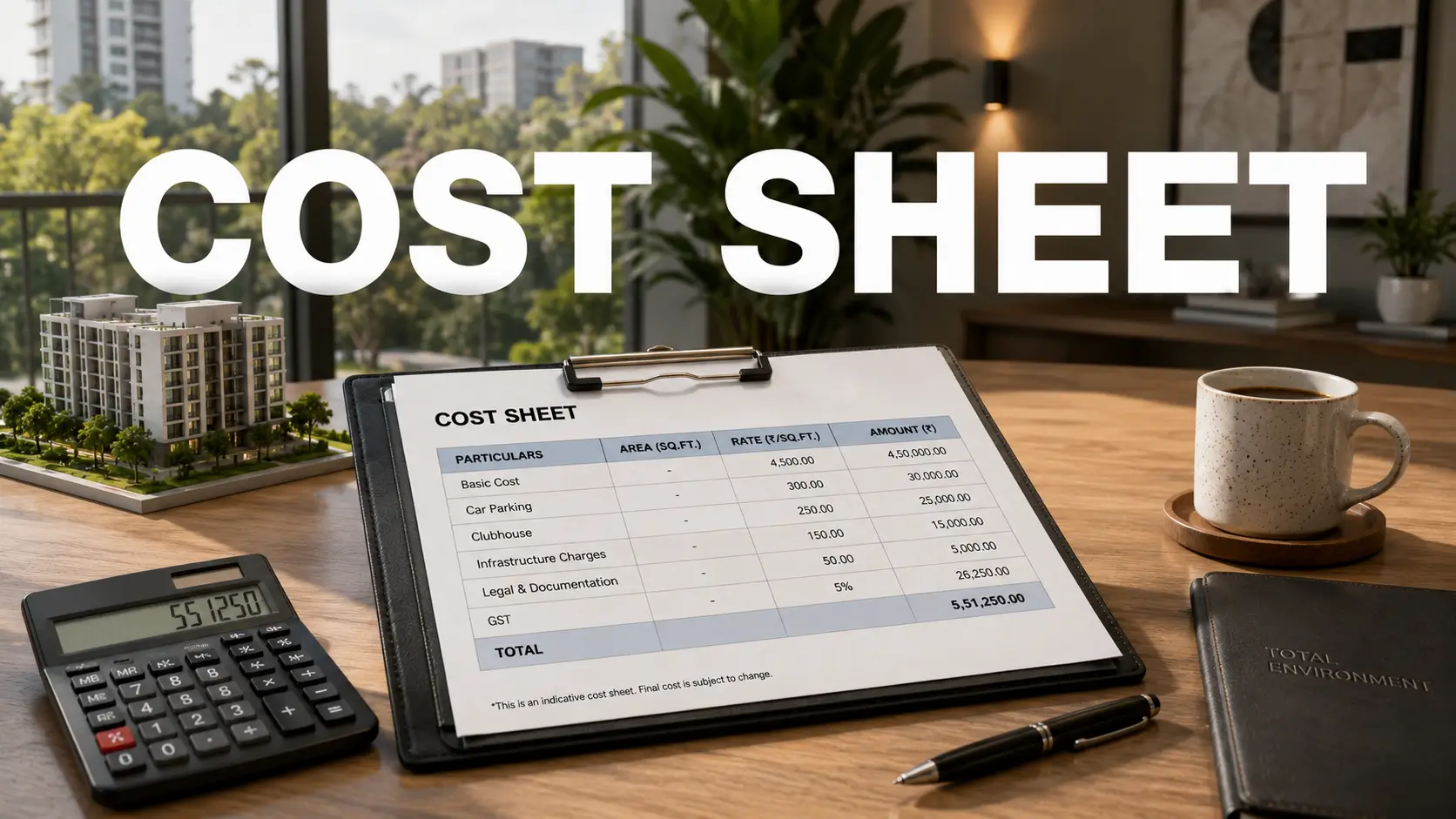
Embassy South Reserve Cost Sheet: Every Line Explained
Rs 1.92 Cr buys a 2 BHK here, or so the headline says. What leaves your account is another figure entirely, and the gap between the two runs to lakhs...

The Embassy South Reserve Booking Process, Step by Step
Buying a home is a sequence of decisions rather than a single one, and knowing the order keeps control where it belongs. Expression-of-interest holders...