
Paying for a home that does not yet exist works nothing like paying for one that does. Money leaves in stages tied to building progress, which eases...
Paying for a home that does not yet exist works nothing like paying for one that does. Money leaves in stages tied to building progress, which eases the burden while tying your cash flow to a construction schedule running to 2032. The Embassy South Reserve payment plan follows that structure, and understanding it before booking helps you plan borrowings, rent and tax relief with reasonable accuracy. Below is how the staging works, what sits outside it, and the questions worth asking before anything is signed.
Staging against construction
Under milestone linked disbursement, payments release against defined building stages rather than calendar dates. Foundations, slabs, structural completion, finishing and handover each trigger a percentage of the consideration.
Two consequences follow. Outflow tracks genuine progress, which offers some protection if work slows, and the total spreads across several financial years instead of landing in one.
Milestone percentages vary between developers, which is why your own schedule matters more than any general description. Read it before booking rather than after the first demand arrives in your inbox.
Cash flow, not headline price, is what determines whether a purchase is comfortable. Mapping the milestones against your income year by year is the single most useful piece of planning available to you.
The first payment
Every purchase opens with a booking amount, set by the developer and stated in the cost sheet. Execution of the agreement to sell follows shortly afterwards.
Ask for that figure in writing before committing, together with the milestone percentages that come after it. A verbal indication is not a schedule, and the written sheet is what governs the relationship.
Once the booking amount is paid, the agreement follows. Until that document is executed you hold a booking rather than a contract, so the interval between the two stages should be kept short.
Demand letters typically arrive with a payment window attached. Knowing the milestone schedule in advance means none of them lands unexpectedly.
Item | When it falls due |
|---|---|
Booking amount | At booking, before the agreement to sell |
Construction milestones | As building stages complete, through to 2032 |
GST at 5% | With each milestone on under-construction homes |
Stamp duty and registration | At registration, on the guidance value |
Club membership and corpus | One-time, typically bundled at booking |
What sits outside the schedule
Several items never appear among the staged demands. GST of 5% applies to under-construction homes, and stamp duty with registration of roughly 7.65% falls due at registration, close to handover.
Beyond tax, the sheet carries floor rise, preferred location charges, club membership, a maintenance corpus contribution, car parking, khata, legal and documentation charges. Budget for these separately, since several land at booking rather than later.
Plan these around the staged demands rather than alongside them. Registration costs in particular land years later, close to handover, and budgeting for them early avoids an unwelcome surprise at the end.
Charges that fall at booking deserve particular attention. Club membership and the corpus contribution arrive early, so the opening months carry more weight than the staged milestones alone would suggest.
Borrowing against milestones
A home loan for under-construction flats disburses against the same stages the developer bills, so your loan release schedule generally mirrors the demand schedule. Embassy typically maintains pre-approvals with major banks and housing finance companies.
Interest during construction deserves modelling. Because disbursement is staggered, your outgoing builds gradually rather than starting at a full instalment, which changes the affordability picture considerably across the early years.
Rent, if you are currently paying it, runs alongside the instalments. That overlap is the item buyers most often underestimate, and the Embassy South Reserve payment plan deserves to be modelled against it year by year.
Disbursement timing also affects your equated instalments. Because a lender releases in tranches, the monthly outgoing rises gradually through construction rather than starting at its eventual level.
Model the overlap between rent and instalments year by year. That single exercise tells you more about affordability than any general rule of thumb.
Planning the tax side
Tax relief on home loans is worth discussing with an adviser at the outset rather than at the end of a financial year. Interest and principal repayment carry relief under Indian tax rules once conditions are met.
For NRI buyers, funding runs through NRE, NRO or FCNR accounts or inward remittance, with repatriation subject to FEMA norms. Settle the route before the first payment rather than afterwards.
Non-resident buyers should settle the route with an adviser at the outset. Funding, power of attorney and repatriation all interact, and sorting them early avoids delays when a milestone demand arrives on a fixed date.
Relief on interest and principal is subject to conditions, including possession in some cases. An adviser can tell you which apply to an under-construction purchase before you rely on them.
Questions to settle before signing
Three questions cover most of the risk. What percentage falls due at each milestone, what happens to the schedule if construction runs behind, and which charges sit outside the staged payments altogether?
Your agreement answers the first two and the cost sheet the third. Keep both together afterwards, because comparing quarterly progress filings against your demand schedule is the simplest monitoring available during a long build.
Comparing filings against demands takes minutes each quarter. Where progress and billing diverge, raising the point in writing early is far easier than arguing about it years afterwards.
Keep the agreement and the cost sheet together once both are signed. Between them they answer nearly every question that arises across the years to handover.
Three questions settle most of the risk: what falls due at each stage, what happens if the build slows, and which charges sit outside the schedule entirely.
Ask our team to walk through the schedule before you book. Ten minutes spent on the milestones now saves a great deal of uncertainty later.
Karnataka RERA Registration No. PRM/KA/RERA/1251/309/PR/090926/008925. To check availability, current pricing or to arrange a site visit, get in touch with our team.
FAQs
What does construction-linked mean?
Payments release against building milestones rather than fixed dates, so outflow follows actual progress.Is GST charged on each demand?
GST of 5% applies to under-construction homes and is charged alongside the staged payments.When is stamp duty paid?
At registration, calculated on the guidance value applicable at that time, at roughly 7.65% for this ticket band.Are club membership and corpus staged?
No. Both are one-time payments, typically bundled at booking.What if construction slows?
Demands follow milestones, so a slower build generally means later demands. Raise any mismatch with the progress filings in writing.Can NRIs borrow in India?
Yes, subject to lender criteria, with funding through NRE, NRO or FCNR accounts or inward remittance.Do I pay rent and instalments together?
If you are currently renting, yes. That overlap is the item buyers most often underestimate, so model it early.Where are milestone percentages stated?
In the booking cost sheet, which also discloses carpet-area pricing under K-RERA rules.
Related Articles

Embassy South Reserve Review: An Honest Assessment
Nobody lives here yet, and possession is set for 2032, so any Embassy South Reserve review has to work from documents rather than experience. That...

The Embassy South Reserve Booking Process, Step by Step
Buying a home is a sequence of decisions rather than a single one, and knowing the order keeps control where it belongs. Expression-of-interest holders...
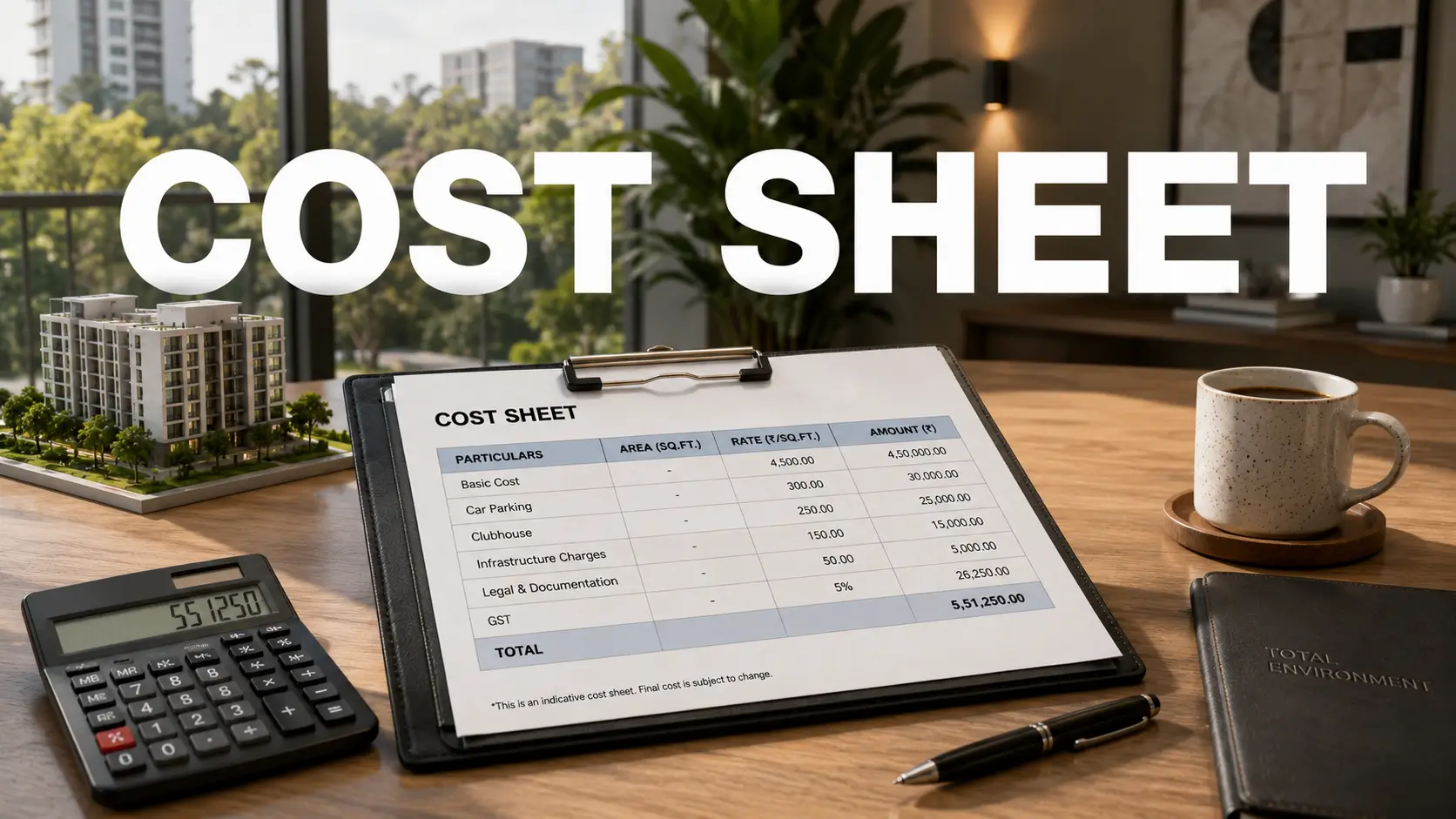
Embassy South Reserve Cost Sheet: Every Line Explained
Rs 1.92 Cr buys a 2 BHK here, or so the headline says. What leaves your account is another figure entirely, and the gap between the two runs to lakhs...

Checking the Embassy South Reserve RERA Registration
A registration number on a brochure proves very little by itself. Behind it sits a filing on a public portal, and that filing is what actually protects...