
Quality in construction is mostly invisible once a building is finished. Frames, waterproofing and services sit behind finishes, and buyers judge them...
Quality in construction is mostly invisible once a building is finished. Frames, waterproofing and services sit behind finishes, and buyers judge them through proxies rather than direct inspection. Assessing Embassy construction quality therefore means looking at specified systems, the standards a developer is held to elsewhere, and the protections that apply if something falls short. This guide covers what is specified at South Reserve, what RERA enforces, what cover exists after handover, and how a buyer can form an independent view.
The structural approach
Structural systems and materials set the foundation for everything else. South Reserve uses an RCC frame with shear walls designed to IS code, with transfer slabs at select levels.
Shear walls matter for towers rising from Ground + 6 to 20 floors, since they provide the lateral stiffness tall buildings require. Transfer slabs allow spatial flexibility on upper floors.
A 3.4-metre floor-to-floor height produces the ten-foot ceilings, and two basement levels carry parking with both natural and mechanical ventilation.
Specification decisions made early are difficult to reverse later. Assessing Embassy construction quality therefore starts with the structural choices rather than the visible finishes.
Waterproofing, drainage and services sit behind finishes yet cause most long-term problems. Specification documents are where a buyer can assess them.
Transfer slabs and shear walls are decisions made at design stage that no later renovation can alter, which is why they deserve attention before purchase.
Two basement levels with proper ventilation reflect planning for a full complement of vehicles rather than a minimum provision.
Element | Specification |
|---|---|
Frame | RCC with shear walls to IS code |
Floor-to-floor | 3.4 metres, giving ten-foot ceilings |
Flooring | Engineered marble in living, dining, kitchen and bedrooms |
Windows | Aluminium and UPVC; DGU in Signature Residences |
Climate control | VRV air conditioning fitted as standard |
Basement | Two levels, naturally and mechanically ventilated |
Materials and finishes
Specified materials indicate intent about longevity. Engineered marble covers living, dining, kitchen and bedroom floors, with vitrified or ceramic tiles and dado in bathrooms.
Aluminium and UPVC window systems are specified for thermal and acoustic performance, which matters near an airport corridor. Signature Residences upgrade to DGU glazing throughout.
Air conditioning arrives fitted rather than retrofitted, with VRV systems in every apartment, alongside CAT6 cabling, modular switches and concealed conduit wiring.
Utility areas outside the kitchen work triangle and attached bathrooms to every primary bedroom reflect planning decisions as much as material ones.
Grid ceilings in bathrooms allow services to be reached without breaking finishes, which is a small decision with lasting practical value.
Balcony depth and railing detail are easy to check on a visit and tell you something about how seriously a developer takes daily living.
What commercial work implies
Grade A office occupiers assess buildings continuously rather than once. Campuses including Embassy Manyata Business Park, serving more than 80,000 professionals, operate under that scrutiny.
Standards developed for tenants of that kind tend to inform residential practice within the same organisation, since specification decisions and supply chains overlap.
Procurement scale also affects quality. Developers buying materials across large portfolios can specify consistently rather than negotiating each project separately.
Consistency across a portfolio also helps residents later, since replacement parts and maintenance knowledge transfer between projects.
Acoustic performance matters particularly near an airport corridor, where glazing specification affects daily comfort over decades of ownership.
Consistent specification across projects also simplifies repairs, since contractors and residents encounter familiar systems.
What RERA enforces
Specification under RERA carries legal weight. Marketed specifications must match sanctioned ones, and any deviation triggers fresh disclosure rather than a quiet substitution.
Sanctioned plans also cannot be altered after launch without meeting consent thresholds, which protects buyers from changes to the design they agreed to purchase.
Quarterly progress filings add visibility during construction, allowing owners to track stages rather than relying on assurances from a sales office.
Consent thresholds protect buyers from post-launch changes, which matters over a construction period running to 2032.
Quarterly filings create a record that can be referred to years afterwards, which is more useful than a memory of a conversation.
Progress filings also create an audit trail should a dispute ever arise about what was built and when.
Cover after handover
Defect liability after handover runs for five years under Karnataka RERA, covering structural and material issues. Responsibility for early faults therefore sits with the developer.
Snagging at handover makes that protection easier to use. A careful inspection when keys change hands documents issues while they are straightforward to address.
Document the handover carefully. Photographs and a written snagging list make the five-year cover considerably easier to rely upon.
Handover inspections benefit from a second pair of eyes. Many buyers engage a professional for the day, which is rarely wasted money.
Keep the specification schedule accessible after handover. It becomes the reference point for any defect liability claim during those five years.
Snagging lists should be acknowledged in writing by the developer, which makes follow-up considerably simpler.
How to assess quality yourself
Knowing how to assess quality yourself makes a buyer considerably better informed. Visit completed projects, look at common areas rather than show flats, and note how finishes have aged.
Read the specification schedule attached to the agreement rather than the brochure. That document lists what the developer is contractually bound to deliver.
Where technical questions arise, an independent engineer or architect can review drawings and specifications on your behalf, which is money well spent on a purchase of this size.
Independent technical review costs a fraction of the purchase and often surfaces questions a buyer would not think to ask.
Ask for the specification schedule early rather than at booking, so there is time to consider it properly.
Technical questions are worth raising early. Developers expect them from informed buyers, and the answers reveal a good deal.
An informed buyer asks better questions, and better questions produce better answers.
Karnataka RERA Registration No. PRM/KA/RERA/1251/309/PR/090926/008925. To check availability, current pricing or to arrange a site visit, get in touch with our team.
FAQs
What structural system is used?
An RCC frame with shear walls designed to IS code, with transfer slabs at select levels.Why do shear walls matter?
They provide lateral stiffness, which towers rising to twenty floors require.What flooring is specified?
Engineered marble in living, dining, kitchen and bedrooms, with tiles in bathrooms and balconies.Is air conditioning included?
Yes. VRV air conditioning is fitted as standard rather than retrofitted.Can specifications be changed later?
Not quietly. Under RERA any deviation from the sanctioned specification requires fresh disclosure.What cover applies after handover?
A five-year defect liability period covering structural and material issues.How do I check quality independently?
Visit completed projects, read the specification schedule in the agreement and consider an independent technical review.Does the brochure govern?
No. The sanctioned specification and the agreement to sell are the binding documents.
Related Articles

Embassy South Reserve Review: An Honest Assessment
Nobody lives here yet, and possession is set for 2032, so any Embassy South Reserve review has to work from documents rather than experience. That...

The Embassy South Reserve Booking Process, Step by Step
Buying a home is a sequence of decisions rather than a single one, and knowing the order keeps control where it belongs. Expression-of-interest holders...
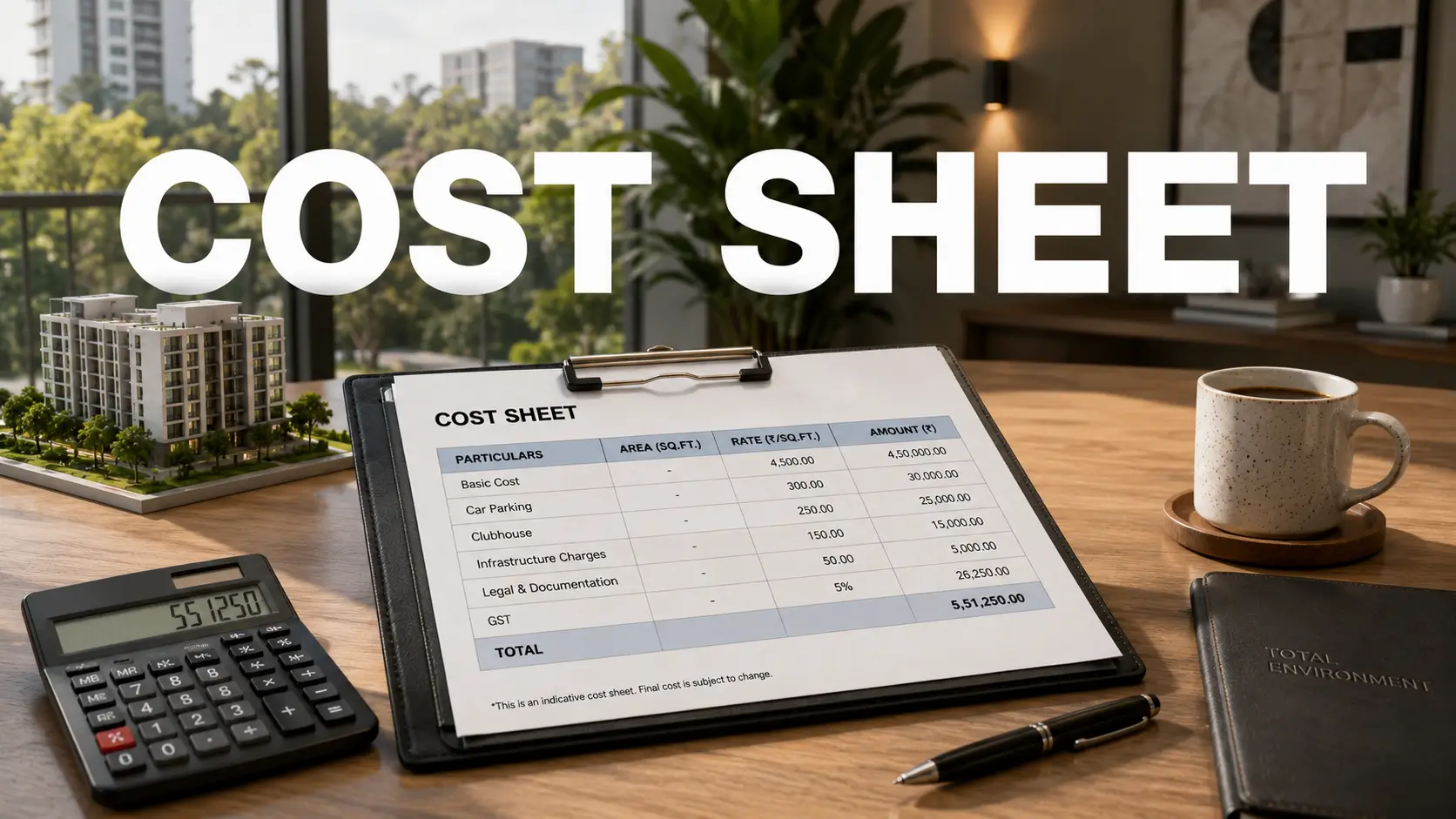
Embassy South Reserve Cost Sheet: Every Line Explained
Rs 1.92 Cr buys a 2 BHK here, or so the headline says. What leaves your account is another figure entirely, and the gap between the two runs to lakhs...

Checking the Embassy South Reserve RERA Registration
A registration number on a brochure proves very little by itself. Behind it sits a filing on a public portal, and that filing is what actually protects...