Buying six years ahead of handover means committing to a building that does not yet exist. Karnataka's disclosure rules make that less uncertain than...
Buying six years ahead of handover means committing to a building that does not yet exist. Karnataka's disclosure rules make that less uncertain than it sounds, since progress is filed publicly every quarter and your payments attach to the same milestones. Following Embassy South Reserve construction therefore becomes a routine rather than a worry, provided you know where to look and what to compare. Here is the structure being built, where progress appears, how it connects to your money, and what ought to prompt a question.
What is being built
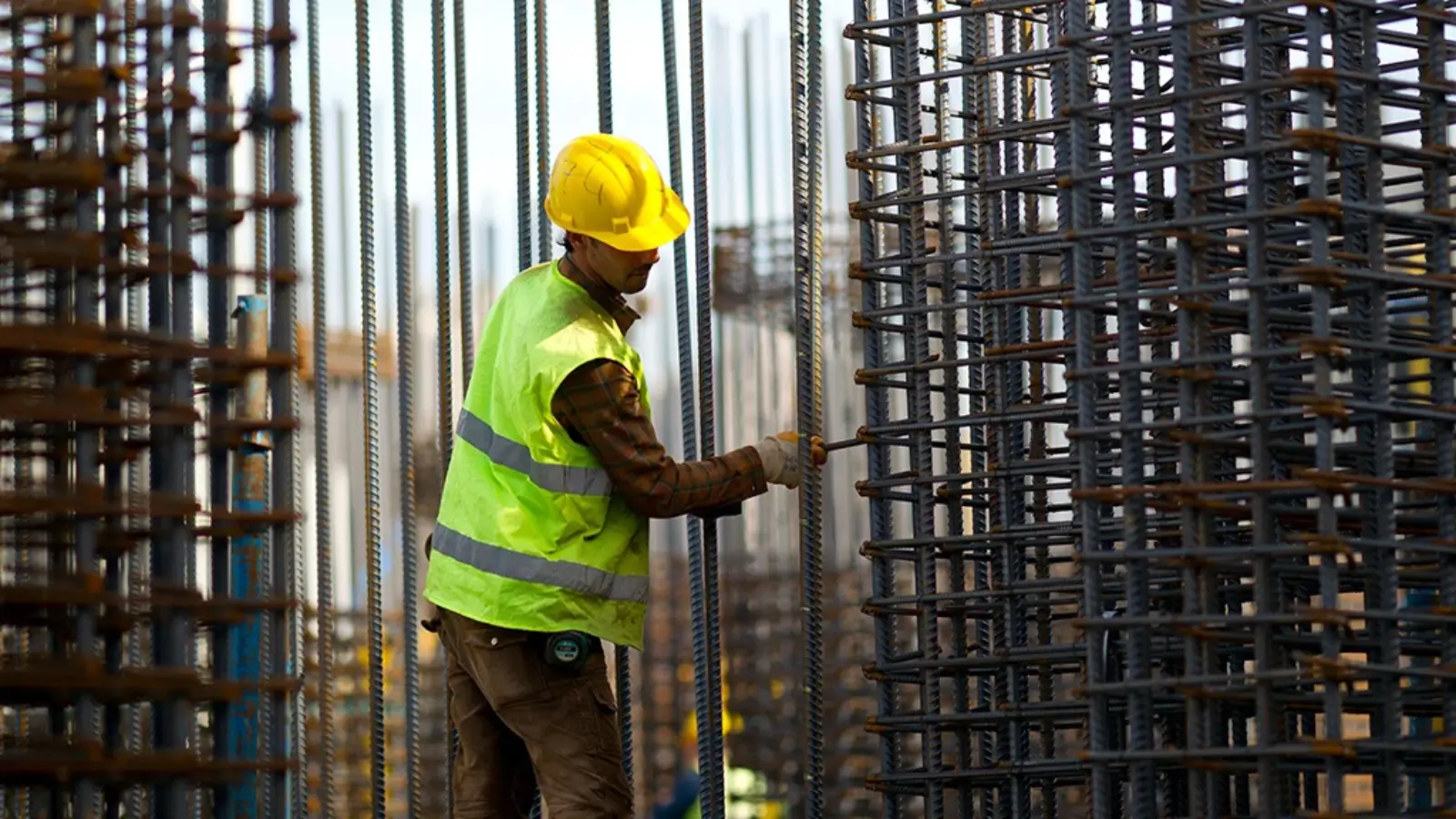
Eight towers rise from Ground + 6 to 20 floors on a 14-acre parcel, holding 855 apartments between them. An RCC frame and shear walls designed to IS code carry the structure, with transfer slabs at select levels.
Shear walls matter particularly for towers of this height, since they provide lateral stiffness. A 3.4-metre floor-to-floor produces the ten-foot ceilings, and two basement levels hold parking with natural and mechanical ventilation.
Below ground, the basements are designed with both natural and mechanical ventilation. Above it, the clubhouse and landscape form part of the same programme rather than arriving as a later phase.
Four configurations and three tiers sit within the same eight towers, which is part of why transfer slabs appear at select levels. Structural flexibility of that kind is decided early and cannot be added later.
Ground plus six to twenty floors is a wide range within a single development. Construction sequencing therefore varies between towers, and progress may look uneven at any given moment.
Where progress appears
Quarterly filings on K-RERA record stage completion against the project registration, and they are free to view. Search the number, open the project record and look for the progress section.
Reading them in sequence is more useful than reading one. Filings are cumulative, so a run of them shows pace rather than position, and pace is what indicates whether a 2032 handover still looks realistic.
Photographs sometimes accompany the filings, though the written milestones carry more weight. A picture shows a moment, whereas the stage record shows what has actually been certified as complete.
Free access to the record is the point. Anyone can check, which keeps the information symmetrical between developer and buyer throughout the build.
What to watch | Why it matters |
|---|---|
Quarterly progress filings | Official record of stage completion |
Milestone triggers on your cost sheet | Payments release against the same stages |
Structural versus finishing stages | Early slippage is the clearest warning sign |
Specification changes | Any deviation requires fresh disclosure under RERA |
Possession date on the filing | Should continue to read 2032 |
How progress connects to payments
Milestones and loan disbursement move together. Your builder demands against completed stages, and your lender releases against the same ones, so the two schedules generally mirror each other.
Keep the cost sheet beside the filings for that reason. If disclosures show slower progress than the demand schedule implies, ask why before paying rather than afterwards.
Bookmark the project page once you find it. Returning each quarter takes moments, and a habit formed early is far easier to keep across six years than one started after a concern has arisen.
Mismatches between progress and billing are worth raising immediately. A demand that runs ahead of certified completion is a fair question, and asking it in writing keeps the answer on record.
What should prompt a question
Deciding what to watch during a long build comes down to three signals: progress that stalls across two consecutive quarters, a possession date that changes on the portal, or a specification that differs between the sanctioned schedule and the marketing material.
None necessarily indicates a problem, and explanations are often straightforward. Raising them in writing remains the right approach, since the answer then becomes part of your own record.
Buyers who purchase together often compare notes as well. Talking to other owners in your tower makes a useful informal check, although Embassy South Reserve construction filings on the portal remain the authoritative record.
Three signals cover most of the risk across a long build: stalled progress, a changed possession date, and a specification that differs from the sanctioned schedule. Everything else is usually noise.
The years ahead
Work will move from earthwork and foundations through structure to finishing across the coming years, with the apartment parcel also progressing towards its IGBC Green Homes Gold certification target.
Alongside the towers, a 38,000 sft clubhouse and 19 acres of landscape form part of the same programme rather than a later phase. Transfer slabs at select levels allow the spatial flexibility that four configurations and three tiers require.
Certification work runs alongside the building programme. An IGBC Green Homes Gold target shapes water, waste and hot water systems, and those elements are installed during construction rather than added afterwards.
Green systems are installed during construction rather than retrofitted. Water, waste and hot water provisions all form part of the same programme as the structure itself.
Building a habit
Set a recurring reminder for the quarterly check. Ten minutes, four times a year, is a modest investment against a purchase of this size and a wait of this length.
Our team can share the current position between filings, which helps in months when no fresh disclosure is due. Treat that as a supplement to the portal rather than a replacement, and the picture you build will stay reliable.
Six years is long enough that the build fades into routine. Check each quarter, keep records in order, and the wait becomes something you monitor rather than something you worry about.
Our team can share the position between filings, which helps during months when no fresh disclosure is due. Use it as a supplement to the portal rather than a replacement for it.
Set a recurring reminder for the quarterly check. Ten minutes, four times a year, is a modest commitment against a purchase of this size.
Karnataka RERA Registration No. PRM/KA/RERA/1251/309/PR/090926/008925. To check availability, current pricing or to arrange a site visit, get in touch with our team.
FAQs
How often is progress published?
Quarterly, through construction progress disclosures filed on the K-RERA portal.What structural system is used?
An RCC frame with shear walls designed to IS code, with transfer slabs at select levels.Do payments depend on progress?
Yes. The construction-linked plan releases payments as building milestones complete.Does slow progress affect my loan?
It can. Lenders disburse against the same milestones, so a slower build delays disbursement as well as demands.What if the possession date changes?
Any change appears on the portal filing. Raise it in writing, since the agreement carries penalty clauses for unjustified delay.Is the clubhouse built later?
No. The 38,000 sft clubhouse and 19 acres of landscape form part of the same build programme.When does construction finish?
Handover is set for 2032, as recorded in the RERA filing and the agreement to sell.Can I visit the site during construction?
Our team can arrange visits subject to site safety requirements at the time.
Related Articles

Embassy South Reserve Review: An Honest Assessment
Nobody lives here yet, and possession is set for 2032, so any Embassy South Reserve review has to work from documents rather than experience. That...

The Embassy South Reserve Booking Process, Step by Step
Buying a home is a sequence of decisions rather than a single one, and knowing the order keeps control where it belongs. Expression-of-interest holders...
Embassy South Reserve Cost Sheet: Every Line Explained
Rs 1.92 Cr buys a 2 BHK here, or so the headline says. What leaves your account is another figure entirely, and the gap between the two runs to lakhs...
Checking the Embassy South Reserve RERA Registration
A registration number on a brochure proves very little by itself. Behind it sits a filing on a public portal, and that filing is what actually protects...