
Tax relief influences when people buy, how much they borrow and whose name a property goes into, which makes it worth understanding before any of those...
Tax relief influences when people buy, how much they borrow and whose name a property goes into, which makes it worth understanding before any of those decisions are made. The rules are also detailed, subject to conditions and revised periodically, so this guide describes how relief works in principle rather than quoting figures that may change. Anyone relying on home loan tax relief for buyers should confirm their own position with a qualified adviser rather than with an article.
How relief generally works
Indian tax rules provide relief in connection with housing loans, with interest and principal treated separately rather than as a single deduction.
Interest and principal treatment differ in both mechanism and conditions, which is why the two are usually discussed apart from one another.
Eligibility depends on conditions including the property's status, its use and the nature of the loan, so general descriptions rarely settle an individual case.
Understanding home loan tax relief for buyers in outline helps, though only an adviser can confirm how the rules apply to you.
Relief connects to housing loans specifically rather than to borrowing in general, which is a distinction that matters in practice.
Provisions differ for self-occupied and let-out property, which is another reason individual advice matters.
Housing loans are treated distinctly from other borrowing, which is why the purpose of a loan matters.
Relief mechanisms differ for interest and principal, which is why advisers discuss them separately.
Why under-construction homes differ
Under-construction property rules are the point most buyers miss. Relief in respect of a property under construction is treated differently from relief on a completed home.
Possession timing therefore matters. At South Reserve, handover is set for 2032, which places several years of payments before the property is complete.
Anyone budgeting on the assumption of immediate relief should test that assumption with an adviser before committing to a payment schedule.
Loan disbursement for an under-construction home is also staggered, which affects when interest actually begins accruing in meaningful amounts.
Conditions attaching to completion mean the timing of possession affects when benefits become available.
Possession in 2032 places several years of payments before the property is complete, which affects timing.
Interest accrues gradually during construction because disbursement follows milestones rather than arriving at once.
Consideration | Why it matters |
|---|---|
Property status | Treatment differs between completed and under-construction homes |
Possession date | 2032 here, which affects when conditions are met |
Loan purpose | Relief connects to housing loans rather than borrowing generally |
Ownership | Joint owners and co-borrowers are assessed individually |
Records | Certificates, receipts and statements evidence any claim |
Rule changes | Provisions are revised periodically by the legislature |
Joint ownership
Joint ownership considerations arise frequently, since many households buy in two names. Co-owners who are also co-borrowers are generally assessed on their own position.
Structuring decisions of that kind are easier to make at purchase than to unwind afterwards, which is why the conversation belongs early.
Funding contributions and ownership shares should align sensibly, and a tax adviser can explain how that interacts with any relief claimed.
Contribution records matter for joint purchases, since documentation supports any position taken later.
Ownership shares and funding contributions should align sensibly, which is easier to arrange at purchase.
Co-borrower arrangements also affect loan eligibility, which lenders assess on combined income.
Joint purchases also affect succession and ownership records, both of which are simpler to arrange at the outset.
Ownership proportions recorded at purchase also govern how any future gain is attributed between owners.
For non-resident buyers
Non-resident buyers face additional considerations, including how Indian rules interact with tax obligations in their country of residence.
Treaty provisions may be relevant depending on where you are resident, and withholding requirements on a future sale differ from those applying to residents.
Purchases here are funded through NRE, NRO or FCNR accounts or inward remittance, with repatriation subject to prevailing FEMA norms.
Currency and residence status both add complexity for buyers living overseas.
Repatriation of sale proceeds later is also subject to prevailing FEMA norms and documentation.
Documentation of the original remittance matters for overseas buyers at sale as well as during ownership.
Non-resident buyers should also confirm how Indian provisions interact with obligations where they live.
Records to keep
Records to keep are straightforward but easily neglected across a six-year construction period. Retain the agreement to sell, the cost sheet, every payment receipt and annual statements from your lender.
Interest certificates issued by lenders each year are the documents most claims rest upon, and reconstructing them later is tedious.
Keep evidence of funding sources too, particularly for overseas buyers, since that documentation matters at sale as well as during ownership.
Digital copies stored securely are worth keeping alongside physical ones across a period this long.
Lender statements and interest certificates form the backbone of most claims, so file them each year.
A single folder holding every document from booking onwards saves considerable effort later.
Keeping records for the full holding period is prudent, since questions can arise years after a purchase.
Statements from a lender arrive annually, and filing each one as it comes avoids reconstruction later.
Getting proper advice
Rules change, and provisions that applied to a purchase made five years ago may not apply today. Relying on a friend's experience is a common and expensive mistake.
Speak to a qualified tax adviser before booking rather than at the end of a financial year, since some decisions cannot be revisited afterwards.
Our team can explain the property and payment side in detail. Tax treatment belongs with your own adviser, and we would rather say so than guess.
Budget conservatively rather than assuming relief, since a purchase that only works with tax benefits is a fragile one.
Rules revised after a purchase may or may not apply retrospectively, which is another reason for professional advice.
Advisers charge modestly relative to a purchase of this size, which makes the consultation good value.
Our team can explain the payment schedule in detail, while tax treatment belongs with your own adviser.
Karnataka RERA Registration No. PRM/KA/RERA/1251/309/PR/090926/008925. To check availability, current pricing or to arrange a site visit, get in touch with our team.
FAQs
Is tax relief available on home loans?
Indian tax rules provide relief in connection with housing loans, with interest and principal treated separately and conditions applying.Does it apply during construction?
Treatment differs for under-construction property, so confirm your position with an adviser before assuming relief applies.When is possession here?
2032, which is relevant because conditions often connect to when a property is completed.Can joint owners both claim?
Co-owners who are also co-borrowers are generally assessed on their own position. Structure this at purchase rather than later.What about non-resident buyers?
Additional considerations apply, including treaty provisions and withholding on a future sale.Which records should I keep?
The agreement to sell, cost sheet, payment receipts, lender statements and annual interest certificates.Do the rules change?
Provisions are revised periodically, so confirm the current position rather than relying on older guidance.Who should I ask?
A qualified tax adviser, ideally before booking rather than at the end of a financial year.
Related Articles

Embassy South Reserve Review: An Honest Assessment
Nobody lives here yet, and possession is set for 2032, so any Embassy South Reserve review has to work from documents rather than experience. That...

The Embassy South Reserve Booking Process, Step by Step
Buying a home is a sequence of decisions rather than a single one, and knowing the order keeps control where it belongs. Expression-of-interest holders...
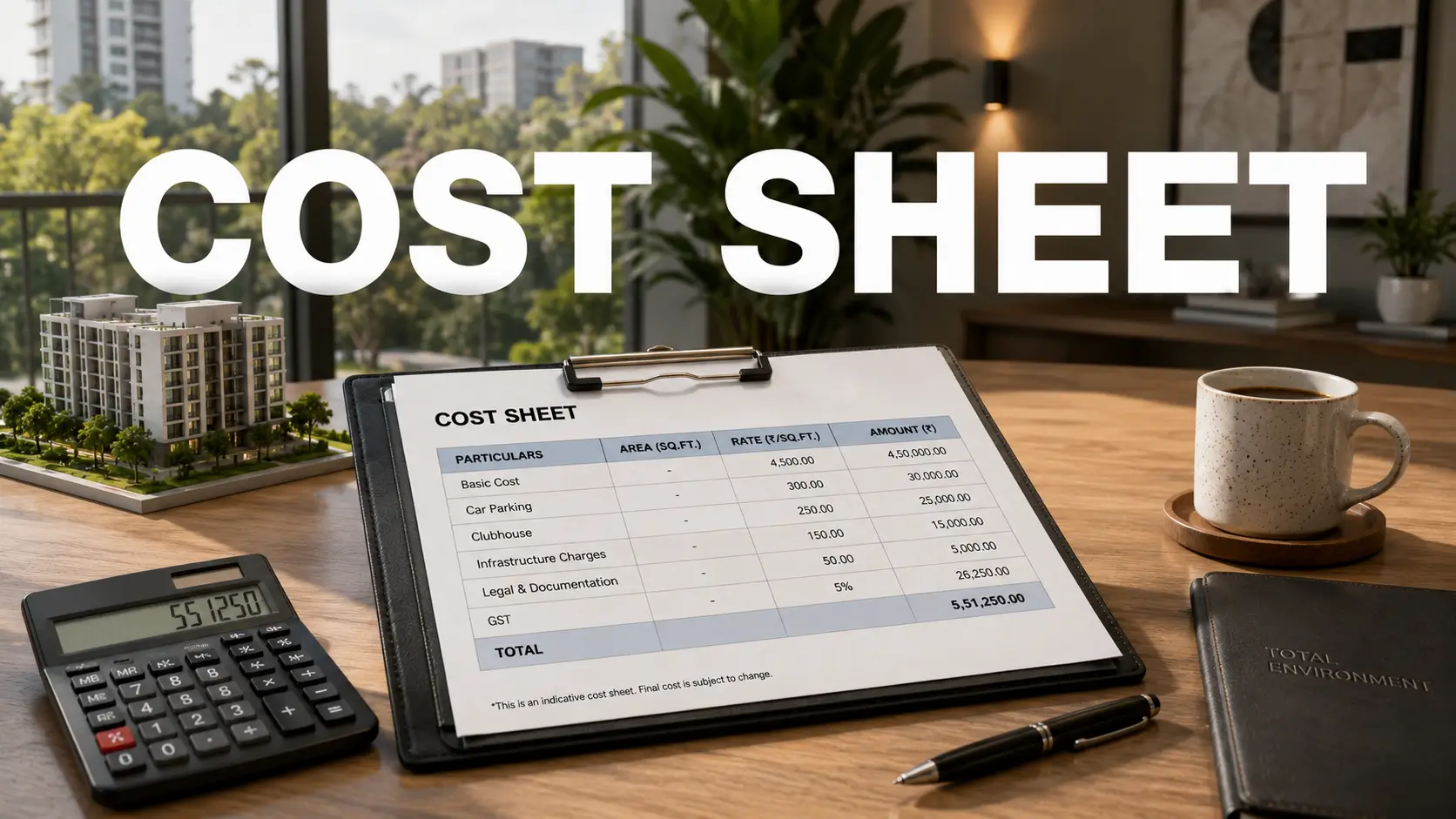
Embassy South Reserve Cost Sheet: Every Line Explained
Rs 1.92 Cr buys a 2 BHK here, or so the headline says. What leaves your account is another figure entirely, and the gap between the two runs to lakhs...

Checking the Embassy South Reserve RERA Registration
A registration number on a brochure proves very little by itself. Behind it sits a filing on a public portal, and that filing is what actually protects...