
Reputation travels faster than evidence, and it is considerably less reliable. Every developer describes itself favourably, which is why a buyer needs...
Reputation travels faster than evidence, and it is considerably less reliable. Every developer describes itself favourably, which is why a buyer needs sources that do not come from a sales gallery. Learning how to check a builder track record takes an afternoon and can prevent years of difficulty. This guide covers the public records available, what a visit to completed work reveals, which corporate filings are worth reading and the questions that tend to produce the most useful answers.
Start with the regulator
The RERA portal and past projects should be the first stop. State authorities publish project records, and Karnataka's portal carries registrations, sanctioned plans, timelines and quarterly progress filings.
Search the developer as well as the project. Records of earlier registrations show whether previous developments were completed within their stated timelines.
Complaints and orders also appear in some state records. Reviewing them gives a fuller picture than any promotional description of a developer's history.
Diligence protects buyers better than reputation does. Knowing how to check a builder track record turns a subjective judgement into a documented one.
State portals differ in what they publish, so a buyer looking at projects in several states should expect varying levels of detail.
Diligence takes an afternoon and protects a purchase running into crores, which is among the better returns on time available to a buyer.
Start early rather than during a booking window, since diligence conducted under time pressure is rarely thorough.
Source | What it reveals |
|---|---|
RERA portal | Registrations, plans, timelines, progress filings |
Completed projects | How materials and maintenance have aged |
Residents | Service response, charges, association functioning |
Financial filings | Solvency and disclosure for listed developers |
Credit ratings | An independent view of creditworthiness |
Specification schedule | What the developer is contractually bound to deliver |
Visit finished work
Visiting completed developments is the most informative hour a buyer can spend. Lift lobbies, corridors, landscaping and parking areas reveal maintenance standards that show flats never do.
Ask when each project was handed over before drawing conclusions. A building completed a decade ago should show its age differently from one finished last year.
Speak to residents where possible. Owners describe service response times, maintenance charges and association dynamics far more candidly than any brochure.
Photographs taken during a visit help later comparison, particularly when assessing several developers across weeks.
Talking to residents requires tact rather than an interrogation. Most are happy to share experiences when asked politely.
Photographs and notes from each visit make comparison far easier when several developers are under consideration.
Read the corporate records
Financial and corporate records matter for under-construction purchases in particular. Listed developers publish annual reports, quarterly results and stock exchange disclosures.
Credit ratings supply an independent assessment. An agency rating reflects an outside view of creditworthiness rather than a company's own account of its position.
For unlisted developers, less is public, and that itself tells you something. Lack of disclosure is not evidence of a problem, though it does limit what a buyer can verify.
Read the notes to accounts rather than only the headline figures, since detail on borrowings and commitments sits there.
Auditor observations and contingent liabilities deserve attention in any set of accounts, since they flag issues management may downplay.
Listed developers publish considerably more than unlisted ones, which makes verification easier rather than merely possible.
Related-party transactions are worth reviewing, since they reveal how funds move within a group of companies.
Examine the project documents
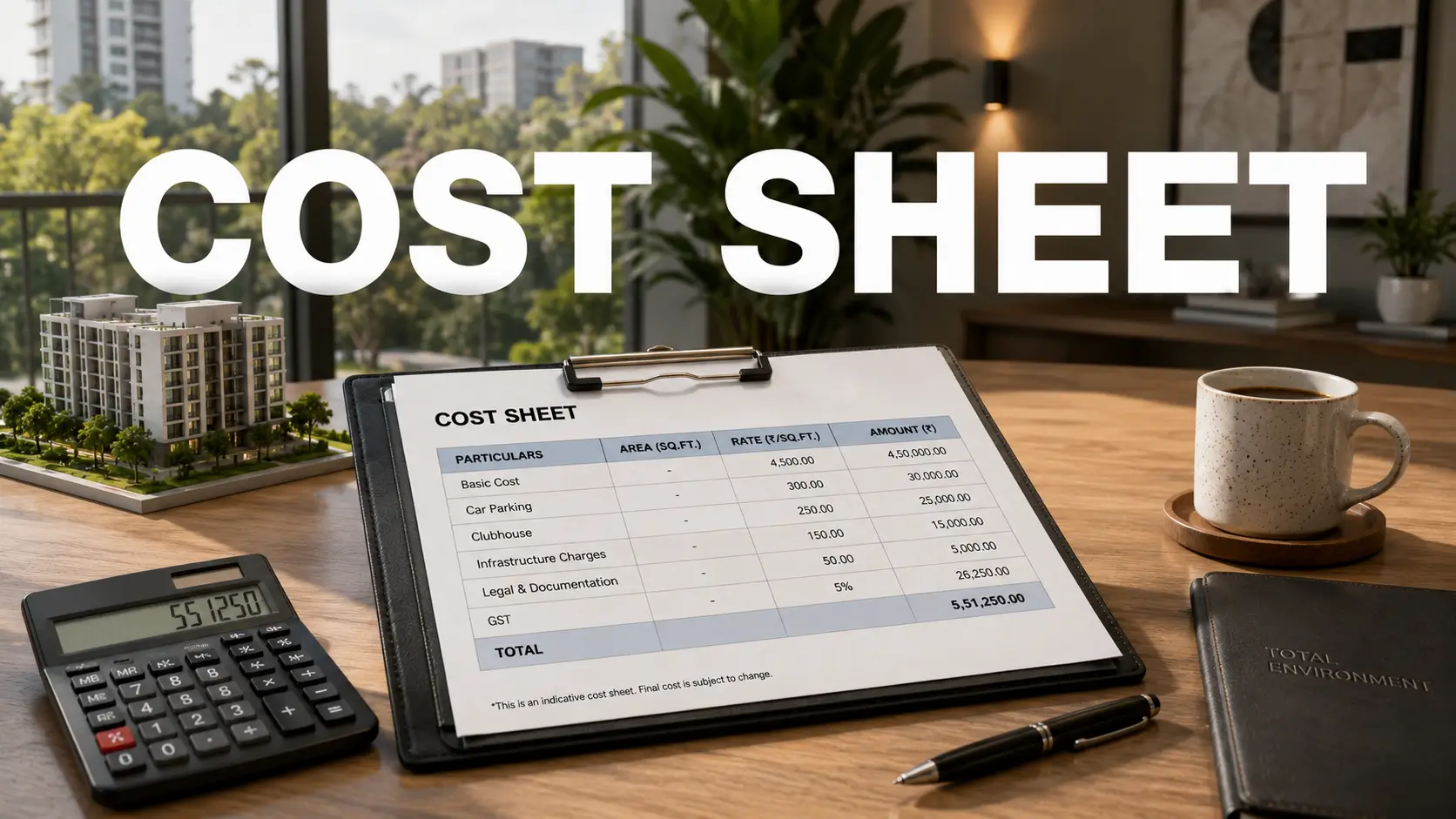
Documents specific to your purchase deserve equal attention. The cost sheet, specification schedule, floor plan and draft agreement to sell describe what you are actually buying.
Compare the sanctioned plan against the marketed one. Both usually match, and the filing governs where they do not.
Keep every document you are given. A file assembled during diligence becomes the reference point for years afterwards.
Compare the marketed plan against the sanctioned one carefully. Differences are usually innocent, though they should be explained.
Draft agreements vary between developers, and reading two side by side reveals which terms are standard and which are not.
Questions worth asking
Certain questions worth asking tend to produce revealing answers. Ask which projects the developer completed in the past five years, how many were delivered on their committed dates, and what happened where they were not.
Post-handover operations deserve questions too. Who maintains common areas, how maintenance charges are set and what the association structure looks like all shape daily life afterwards.
A developer comfortable answering those questions in writing is generally one worth considering further.
Written answers beat verbal ones consistently. Anything important enough to ask is important enough to have on record.
Silence in response to a reasonable written question is itself an answer, and worth weighing accordingly.
Ask the same questions of every developer you consider. Comparison works only when the questions stay consistent.
Consistency in questioning is what makes comparison possible across several developers.
Putting it together
No single source settles the question. Regulatory records, completed work, financial filings and project documents together form a picture that any one of them alone cannot.
Weight recent evidence more heavily than older achievements. Organisations change, and what a developer delivered fifteen years ago matters less than what it delivered recently.
Our team can point you towards the records and arrange visits where access permits, though the assessment itself should remain yours.
Set aside a day for this work. Against a purchase running into crores, the time is trivial and the protection substantial.
Our team can supply the documents and point towards the records, while the judgement remains entirely yours.
Assembling the records is something our team can help with, and we would rather you checked than took our word for anything.
A day spent checking is trivial against a commitment measured in crores and years.
Diligence rarely feels urgent until it is too late to conduct properly.
Karnataka RERA Registration No. PRM/KA/RERA/1251/309/PR/090926/008925. To check availability, current pricing or to arrange a site visit, get in touch with our team.
FAQs
Where do I start?
With the state RERA portal, which carries registrations, sanctioned plans, timelines and progress filings.Can I check past projects?
Yes. Searching the developer's earlier registrations shows whether previous projects met their stated timelines.Why visit completed developments?
Common areas reveal how materials and maintenance have aged, which show flats cannot.Should I speak to residents?
Where possible. Owners describe service response, charges and association functioning candidly.What financial records exist?
Listed developers publish annual reports, quarterly results and exchange disclosures, alongside any credit ratings.What if a developer is unlisted?
Less information is public. That is not evidence of a problem, though it limits what you can verify.Which project documents matter?
The cost sheet, specification schedule, floor plan and draft agreement to sell.What should I ask directly?
Which projects completed in the past five years, how many met their dates, and what happened where they did not.
Related Articles

Embassy South Reserve Review: An Honest Assessment
Nobody lives here yet, and possession is set for 2032, so any Embassy South Reserve review has to work from documents rather than experience. That...

The Embassy South Reserve Booking Process, Step by Step
Buying a home is a sequence of decisions rather than a single one, and knowing the order keeps control where it belongs. Expression-of-interest holders...
Embassy South Reserve Cost Sheet: Every Line Explained
Rs 1.92 Cr buys a 2 BHK here, or so the headline says. What leaves your account is another figure entirely, and the gap between the two runs to lakhs...

Checking the Embassy South Reserve RERA Registration
A registration number on a brochure proves very little by itself. Behind it sits a filing on a public portal, and that filing is what actually protects...