Asking whether somewhere is a good place to live only makes sense once you know who is asking. A frequent flyer, a family with school-age children and...
Asking whether somewhere is a good place to live only makes sense once you know who is asking. A frequent flyer, a family with school-age children and a couple working in the city centre will each reach different conclusions about the same address. Answering is Devanahalli a good place to live therefore means describing the area accurately and letting readers judge the fit. This guide covers the daily routine, what sits within reach, what still does not, and which households tend to settle happily here.
What daily life looks like
Daily life on the airport corridor is shaped by the road. NH-44 carries most trips, with the airport about 14 km away, Yelahanka New Town roughly 10 km and Hebbal Flyover around 16 km.
Density is lower than in the city's older suburbs, and newer housing dominates. Many residents describe a quieter weekday rhythm, with weekend trips towards Yelahanka or Hebbal for larger retail.
The area is still changing, which cuts both ways. Facilities keep arriving, though some streets remain works in progress while surrounding development completes.
Perception lags reality in growing areas. Asking is Devanahalli a good place to live often produces answers based on how the belt looked five years ago rather than how it functions today.
Areas in transition reward patience and punish impatience. Buyers comfortable with change generally settle here more happily than those expecting a finished suburb.
Expectations decide satisfaction more than facts do. Buyers who arrive expecting a mature suburb are disappointed; those expecting a developing one rarely are.
Ask the question again in five years and the answer may differ. Areas in transition move quickly, and today's gaps are often tomorrow's amenities.
Employment within reach
Four sectors operate nearby. Aerospace and defence sit at the KIADB Aerospace SEZ and Aerospace Park about 10 km away, financial services at IFCI Financial City around 8 km, and IT and manufacturing at Devanahalli Business Park and the industrial zone at 11 to 13 km.
That spread is unusual for an outer belt. It means a household can often find work within a short commute rather than committing to a long daily drive towards the centre.
Two-earner households benefit most from the employment spread. Finding two roles within a short radius is considerably easier here than in most outer belts.
Two incomes within a short radius also reduce risk. Should one role end, the other keeps the household anchored to the same address.
Schools, healthcare and shopping
Amenities within reach cover most needs. Stonehill International School sits about 2 km from the Tharahunise belt, with several international and national-curriculum schools at 8 to 14 km.
Multi-speciality hospitals cluster around Yelahanka at 10 to 12 km, and tertiary centres towards Hebbal at 16 to 18 km. For retail and leisure, RMZ Galleria and Forum 13 Degree North are about 11 km away, with Phoenix Mall of Asia roughly 15 km.
Weekend routines take shape around the larger centres. Yelahanka and Hebbal absorb most of the shopping and dining that the corridor itself does not yet support.
Weekday and weekend rhythms differ sharply here. Visiting on both gives a fuller sense of how the area actually functions.
| Need | Nearest option | Distance |
|---|---|---|
| International school | Stonehill International School | ~2 km |
| Multi-speciality hospital | Sparsh Hospital, Yelahanka | ~10 km |
| Everyday retail | RMZ Galleria Mall | ~11 km |
| Large mall | Phoenix Mall of Asia | ~15 km |
| Airport | Kempegowda International Airport | ~14 km |
| Major employment | IFCI Financial City | ~8 km |
What the area lacks
Honesty matters here. Considering what the area lacks, the city centre is genuinely far, at about 30 km or 55 to 70 minutes to MG Road, which rules the corridor out for daily CBD commuters.
Street-level retail and dining remain thinner than in established suburbs. Households used to walking out for a coffee or a chemist may find themselves driving more often than they expect.
Several transport projects are also unfinished. Doddajala Metro Station, the Satellite Town Ring Road and the Peripheral Ring Road are all under execution rather than in service.
Construction activity is part of daily life for now. Living in a developing area means accepting some noise and dust while surrounding projects complete.
Dust and noise from nearby construction are temporary, though temporary can mean several years. Ask what is planned immediately around any home you consider.
Who moves here
Looking at who moves here produces a consistent picture. Professionals working in the northern employment belt, frequent flyers, and families wanting newer housing with more space for the money form the bulk.
Investors form another group, drawn by corridor growth of roughly 13.5% a year between 2020 and 2026 and by rental demand from corporate tenants nearby.
Households whose lives centre on the city's core are the clearest mismatch. No amount of amenity compensates for a commute that runs against the grain of a daily routine.
Rental demand reflects the same drivers. Corporate tenants from nearby employers form the core of the market, which shapes what lets quickly and what does not.
Community forms quickly in new developments. Shared facilities and a similar buyer profile tend to bring neighbours together faster than in older areas.
Household size shapes the verdict as well. Larger families tend to value space more highly than immediate retail access.
Reaching your own verdict
Spend a weekday here rather than a Sunday. Drive your likely commute, visit the schools you would consider, and see how the area feels when it is working rather than resting.
Our team can arrange a visit timed around your own routine and talk through the trade-offs candidly, including the ones that might point you somewhere else entirely.
Talk to people who already live nearby if you can. Residents describe the trade-offs more candidly than anyone selling or buying.
Our team can arrange a weekday visit and answer the awkward questions as readily as the easy ones.
Bring a list of your household's non-negotiables. Measuring an area against them beats forming a general impression.
Karnataka RERA Registration No. PRM/KA/RERA/1251/309/PR/090926/008925. To check availability, current pricing or to arrange a site visit, get in touch with our team.
FAQs
Is it far from the city centre?
Yes. MG Road sits about 30 km away, taking 55 to 70 minutes off-peak, so it suits northern jobs better.What is nearby for daily needs?
Schools from about 2 km, multi-speciality hospitals at 10 to 12 km, and retail from about 11 km.Are there jobs close by?
Four employment sectors operate within roughly 13 km, spanning aerospace, financial services, IT and manufacturing.Is public transport available?
Road connectivity is established, while Doddajala Metro Station on the Blue Line remains under execution.Who tends to move here?
Professionals in the northern belt, frequent flyers, families wanting newer housing, and investors.What are the main drawbacks?
Distance from the centre, thinner street-level retail, and transport projects still under construction.How has the area performed?
The corridor compounded at roughly 13.5% a year between 2020 and 2026.How should I judge the fit?
Visit on a weekday, drive your likely commute, and see the area functioning rather than at rest.
Related Articles

Embassy South Reserve Review: An Honest Assessment
Nobody lives here yet, and possession is set for 2032, so any Embassy South Reserve review has to work from documents rather than experience. That...

The Embassy South Reserve Booking Process, Step by Step
Buying a home is a sequence of decisions rather than a single one, and knowing the order keeps control where it belongs. Expression-of-interest holders...
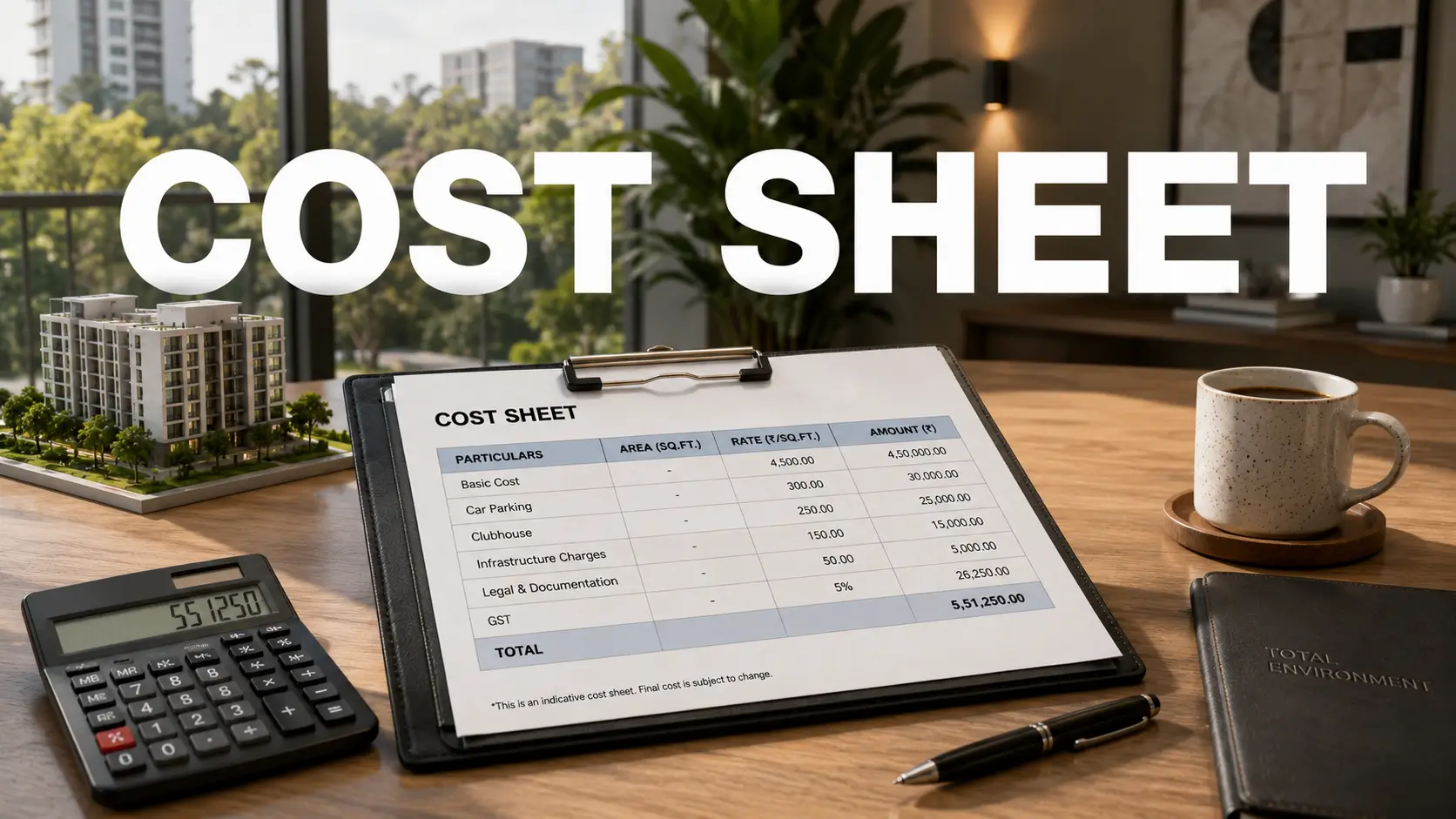
Embassy South Reserve Cost Sheet: Every Line Explained
Rs 1.92 Cr buys a 2 BHK here, or so the headline says. What leaves your account is another figure entirely, and the gap between the two runs to lakhs...

Checking the Embassy South Reserve RERA Registration
A registration number on a brochure proves very little by itself. Behind it sits a filing on a public portal, and that filing is what actually protects...