
Regulation rarely excites anyone until it is needed, at which point it becomes the most important document in a transaction. India's real estate law...
Regulation rarely excites anyone until it is needed, at which point it becomes the most important document in a transaction. India's real estate law changed the balance between developers and buyers considerably, and Karnataka enforces it more firmly than several states. Knowing what Karnataka RERA protects lets a buyer verify claims, track construction and act if something goes wrong. This guide covers the main protections, how to use them in practice, and where the framework stops.
The core protections
Several provisions work together rather than individually. Registration itself places sanctioned plans, milestone timelines, financial status and unit inventory on a public portal.
Escrow and fund segregation require 70% of buyer funds to sit in a dedicated account, restricting diversion to other projects.
Quarterly construction progress disclosures then allow owners to track a build without relying on assurances from a sales office.
Registration alone answers a great many questions, which is why it belongs at the start of any purchase process.
Sanctioned plans on the portal also show what was approved rather than what appears in marketing material.
Inventory disclosure also shows what genuinely remains available rather than what a sales office describes.
Public filings mean a buyer no longer depends solely on what a developer chooses to disclose.
Milestone timelines filed with the authority also give buyers a reference point against which to measure progress.
Protection | What it means |
|---|---|
Registration | Plans, timelines and inventory on public record |
Escrow segregation | 70% of buyer funds held in a dedicated account |
Quarterly filings | Construction progress published through the build |
Carpet area pricing | Usable area disclosed rather than saleable alone |
Possession commitment | A filed date with penalty clauses for unjustified delay |
Defect liability | Five years after handover for structural and material issues |
Carpet area disclosure
Carpet area disclosure changed how buyers compare projects. Prices must be quoted on carpet area, which measures usable space inside the walls of a home.
Saleable area includes walls, balconies and a share of common space, and the ratio between the two varies between developments.
Comparing two projects on carpet area rather than saleable area frequently reorders a shortlist, which is precisely why the requirement exists.
Knowing what Karnataka RERA protects also tells you what to ask for, since every protection corresponds to a document you can request.
Escrow rules address the mechanism by which stalled projects have most often failed buyers.
Requesting each corresponding document turns a list of protections into a practical checklist.
Escrow, disclosure and penalties address different failures, which is why the framework works as a set rather than singly.
Possession and penalties
Possession commitments and penalties give a filed date legal weight. The date recorded with the authority also appears in the agreement to sell.
Penalty clauses cover delivery that runs late without justification, and buyers hold direct legal recourse with defined adjudication timelines.
At South Reserve, the committed date is 2032, which a buyer can verify against the filing rather than accepting from a conversation.
Comparing carpet area between projects reveals efficiency differences that saleable figures conceal entirely.
Efficiency between carpet and saleable area varies by design, which is why the comparison rewards attention.
Two homes advertised at the same saleable area can differ meaningfully in usable space inside the walls.
Efficiency varies by design, and comparing carpet area is the only way to see it clearly.
Saleable area includes walls, balconies and a share of common space, which is why the two figures differ.
Specification and plan protection
Marketed specifications must match sanctioned ones, and any deviation triggers fresh disclosure rather than a quiet substitution.
Sanctioned plans also cannot be altered after launch without meeting consent thresholds, which protects the design a buyer agreed to purchase.
After handover, a five-year defect liability period covers structural and material faults, placing responsibility for early problems with the developer.
Consent thresholds matter across a long build, since they prevent changes to a design after buyers have committed.
Defect liability covering five years also shifts responsibility for early faults away from a new owner.
Buyers committing in 2026 are protected against layout changes made in 2029 or 2030.
Five years of defect cover also gives new owners time to identify issues that emerge only after occupation.
Using the framework
Verification is the first and most useful step. Search the registration number on the portal, confirm it covers your tower, and compare the sanctioned plan against the marketed one.
At this project the registration is PRM/KA/RERA/1251/309/PR/090926/008925, which anyone can look up without an account.
Filing a complaint is possible where a developer fails to meet obligations, and the authority provides a process with defined timelines for resolution.
Quarterly filings continue through construction, so verification is an ongoing habit rather than a single check.
Complaints follow a defined process with timelines, which gives buyers a route that does not depend on goodwill.
Bookmarking the project page makes the quarterly check a habit rather than an effort.
Verification during construction matters as much as verification before booking.
A complaint process with defined timelines gives buyers a route that does not depend on a developer's goodwill.
Where the framework stops
Registration is not a quality guarantee. It ensures disclosure and provides remedies rather than certifying that a building will be well constructed.
Title, encumbrance and conversion status still warrant an independent legal opinion, since those questions sit outside what a portal confirms.
Our team can point you to the filings and explain what each section shows, though the verification itself should remain yours to conduct.
Legal opinion covers the questions a portal cannot, including title, encumbrance and land conversion status.
Registration is a floor rather than a ceiling, and careful buyers build their own checks on top of it.
Our team can walk you through each section of a filing so nothing is taken on trust.
Verification remains yours to conduct, and our role is to make the documents easy to find and read.
Karnataka RERA Registration No. PRM/KA/RERA/1251/309/PR/090926/008925. To check availability, current pricing or to arrange a site visit, get in touch with our team.
FAQs
What does registration put on record?
Sanctioned plans, milestone timelines, financial status and unit-level inventory, all publicly viewable.How are my funds protected?
Seventy percent of buyer funds must sit in a dedicated account, restricting diversion to other projects.What is carpet area disclosure?
Prices must be quoted on usable area inside the walls rather than on saleable area alone.What happens if handover is late?
Penalty clauses cover unjustified delay, and buyers hold direct legal recourse with defined timelines.Can specifications be changed?
Not quietly. Marketed specifications must match sanctioned ones, and deviations require fresh disclosure.Is there cover after possession?
A five-year defect liability period covers structural and material issues.What is the registration number here?
It is PRM/KA/RERA/1251/309/PR/090926/008925, searchable on the Karnataka RERA portal.Does registration guarantee quality?
No. It ensures disclosure and provides remedies rather than certifying construction standards.
Related Articles

Embassy South Reserve Review: An Honest Assessment
Nobody lives here yet, and possession is set for 2032, so any Embassy South Reserve review has to work from documents rather than experience. That...

The Embassy South Reserve Booking Process, Step by Step
Buying a home is a sequence of decisions rather than a single one, and knowing the order keeps control where it belongs. Expression-of-interest holders...
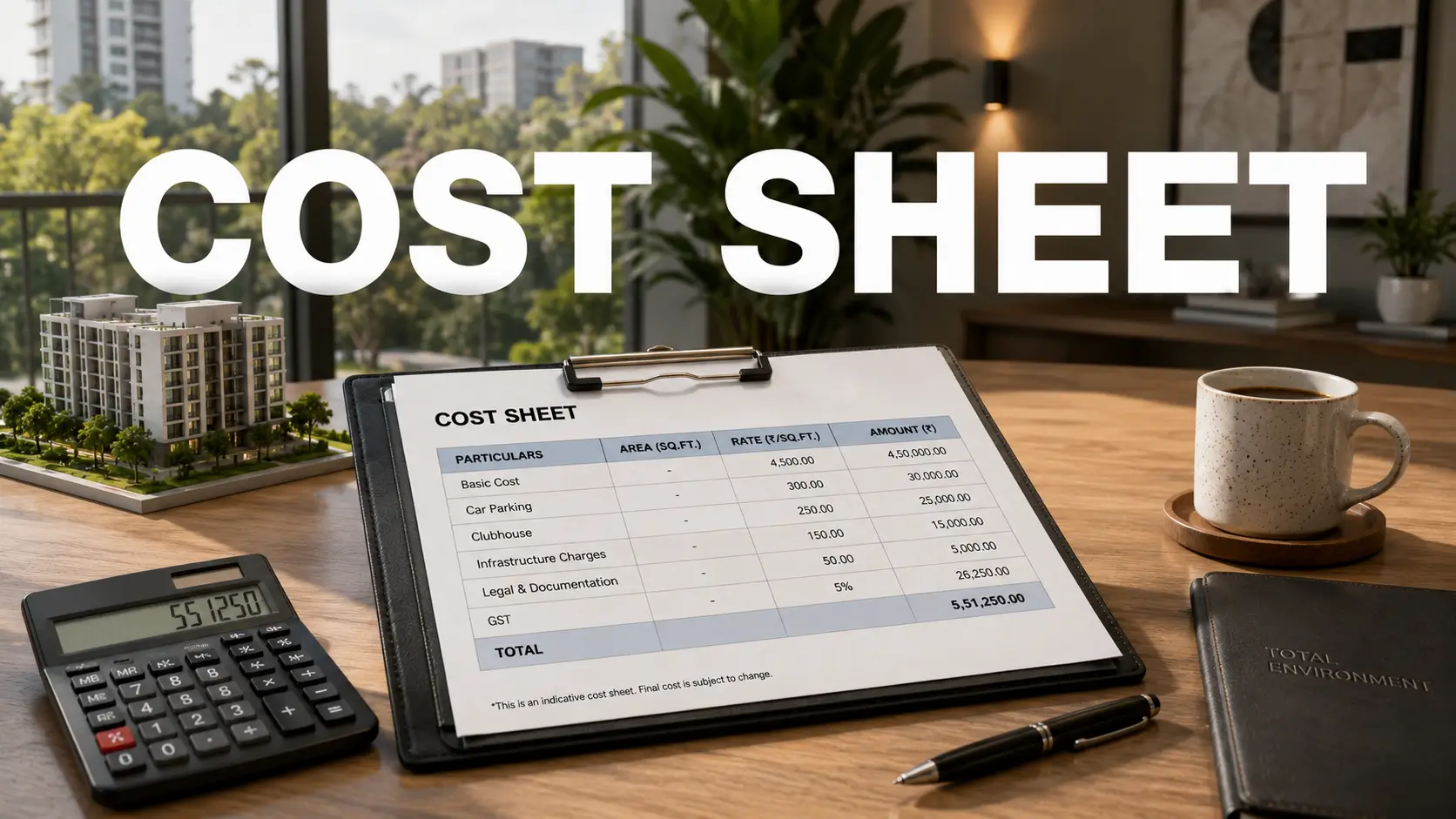
Embassy South Reserve Cost Sheet: Every Line Explained
Rs 1.92 Cr buys a 2 BHK here, or so the headline says. What leaves your account is another figure entirely, and the gap between the two runs to lakhs...

Checking the Embassy South Reserve RERA Registration
A registration number on a brochure proves very little by itself. Behind it sits a filing on a public portal, and that filing is what actually protects...